
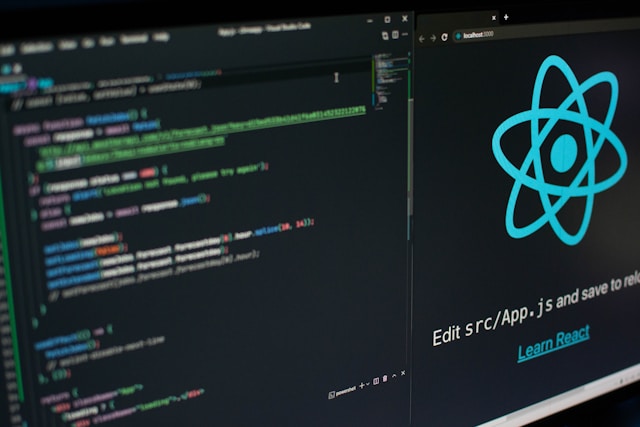
This React JS tutorial for beginners will help you learn one of the most popular and in-demand JavaScript libraries in the world in 2026. React is used by companies like Facebook, Instagram, Netflix, Airbnb, and thousands of others to build fast and dynamic user interfaces. Whether you want to become a frontend developer, full-stack developer, or simply add React to your skill set, this complete step-by-step guide will take you from your first component to building complete React applications.
What is React JS?
React is a JavaScript library created by Facebook for building user interfaces. It uses a component-based architecture where the UI is broken down into small reusable pieces called components. React uses a virtual DOM (Document Object Model) to efficiently update only the parts of the page that have changed making applications fast and responsive. React is not a full framework — it focuses specifically on the UI layer and pairs with other tools for routing, state management, and backend communication.
Why Learn React in 2026?
- React is the most popular frontend library — used by millions of developers and thousands of companies.
- High demand — React developer jobs are consistently among the most posted tech positions.
- Strong ecosystem — React Native for mobile, Next.js for server-side rendering, and thousands of libraries.
- Component reusability — build once, use everywhere reducing development time significantly.
- Excellent salary — React developers earn premium salaries globally.
Setting Up Your React Environment
Make sure you have Node.js installed (download from nodejs.org). Open your terminal and run: npx create-react-app my-first-app. Navigate to the project folder: cd my-first-app. Start the development server: npm start. Open your browser at http://localhost:3000 and you will see your React application running — you are ready to start coding!
Core React Concepts
Components
Example: function Welcome() { return a heading element that says Hello CareerTechGuide. Every React application is a tree of components — from a root App component down to individual buttons and inputs.
Props
Props (short for properties) allow you to pass data from a parent component to a child component. Example: passes the name prop to the Welcome component which can use it as props.name. Props make components reusable — the same component can display different content based on the props it receives.
State with useState Hook
State is data that can change over time within a component. The useState hook manages state in functional components. Example: const [count, setCount] = useState(0). The first value is the current state and the second is a function to update it. When state changes React automatically re-renders the component to reflect the new data.
useEffect Hook
The useEffect hook handles side effects — operations that happen outside React’s rendering cycle like fetching data from an API, updating the document title, or setting up event listeners. useEffect runs after the component renders and can be configured to run only when specific values change using the dependency array.
Building Your First React Application
Build a simple weather application to practice React concepts. Create a search input component where users enter a city name. Use useEffect and the fetch API to call a free weather API when the user searches. Display the weather data using multiple components — a WeatherCard component, a TemperatureDisplay component, and a WeatherDetails component. This project teaches you components, props, state, API calls, and conditional rendering all in one project.
React Developer Salaries in 2026
- Junior React Developer (0-2 years): $60,000 to $85,000 per year in USA, AED 8,000 to 14,000 in UAE
- Mid Level React Developer (2-5 years): $85,000 to $125,000 per year in USA, AED 14,000 to 22,000 in UAE
- Senior React Developer (5+ years): $125,000 to $165,000+ per year in USA, AED 22,000 to 35,000 in UAE
Final Thoughts
React JS is one of the most valuable skills you can add to your development toolkit in 2026. Its component-based architecture, massive ecosystem, and high demand make it the ideal starting point for anyone looking to build a career in frontend or full-stack web development.
Start building today — components, props, state, and hooks are all you need to build impressive React applications. Have questions about learning React? Drop them in the comments below!
